How to measure ITSM ROI in ServiceNow: key metrics that prove business value
January 16, 2026
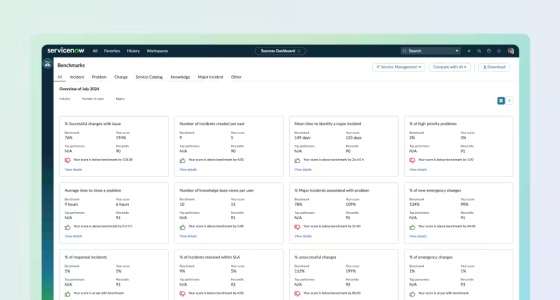
IT service management (ITSM) is a critical enabler of business continuity, productivity, and growth. That’s why many organizations invest heavily in platforms like ServiceNow, expecting better efficiency, improved user experience, and a strong return on investment.
But one question often remains unanswered: How do you actually know if your ServiceNow ITSM implementation is delivering real value?
Measuring ITSM ROI isn’t just about reporting numbers. It’s about proving impact, gaining executive buy-in, and identifying where IT can continue to improve and scale.
Without clear metrics, ITSM initiatives tend to lose momentum. Tools are implemented, processes are defined, but the business struggles to see tangible outcomes.
Measuring ITSM ROI in ServiceNow helps you:
ServiceNow generates a massive amount of data. The challenge isn’t access—it’s knowing which metrics actually tell the story of success.
Before jumping into KPIs, it’s essential to define what “return” means for your organization. In ITSM, ROI usually shows up through improvements such as:
True ITSM ROI comes from quantifying these improvements and comparing them against the total investment in tools, people, and processes.
ServiceNow provides countless metrics—but not all of them drive meaningful insight. Below are the ITSM KPIs that truly help measure ROI and performance.
Incident management is often the most visible ITSM process and a strong indicator of both efficiency and user satisfaction.
Key metrics to track:
These metrics directly influence how users perceive IT.
Service requests reflect how responsive IT is to everyday business needs.
Important indicators include:
Strong performance here usually translates into higher productivity and lower friction across teams.
Change management measures how well IT balances speed with stability.
Metrics that matter:
Too many emergency changes often indicate planning or maturity gaps.
The biggest ROI gains happen when IT moves from reactive to proactive.
Key metrics include:
Reducing recurring incidents creates long-term efficiency and cost savings.
Empowered users and agents drive scalable ITSM.
Metrics to monitor:
Effective self-service reduces ticket volume while improving user experience.
Operational metrics explain performance. Financial metrics explain value.
Key financial indicators include:
ITSM ROI is calculated by comparing these benefits against the full cost of your ServiceNow investment.
Metrics only make sense when viewed in context.
Effective benchmarking strategies include:
Benchmarks should reflect what matters most to your business, not just generic standards.
Tracking KPIs is only the first step. Real value comes from using data to improve.
Proven practices include:
Mature ITSM organizations focus on continuous, incremental improvements, not one-time transformations.
Many organizations fall into similar traps:
The key is clarity, relevance, and actionability.
As ServiceNow continues to evolve with AI and automation, how we measure success is changing too.
Emerging areas include:
ROI is no longer just about efficiency—it’s about anticipation, experience, and resilience.
To fully unlock the value of your ServiceNow investment:
Measuring ITSM ROI in ServiceNow goes far beyond ticket counts or uptime metrics. It’s about understanding how IT contributes to business outcomes, improves user experience, and optimizes cost.
When you focus on the right KPIs, apply smart benchmarking, and build a culture of data-driven improvement, ServiceNow becomes a strategic asset—not just an operational tool.
If your organization is using ServiceNow but lacks clear visibility into its impact, now is the time to act.
👉 Let’s talk about how to define, measure, and optimize ITSM ROI with ServiceNow. Our experts can help you turn metrics into insights—and insights into real business results.