Building a Culture of Continuous Improvement: Using Data and Feedback Loops in monday.com
December 14, 2025
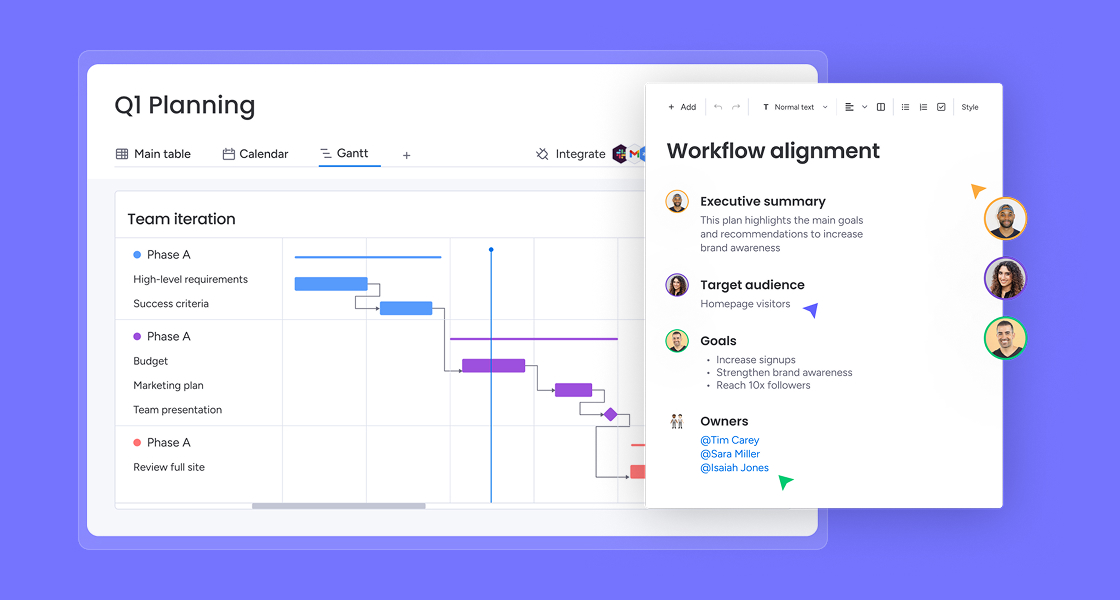
Modern organizations operate under constant pressure to improve efficiency, enhance customer experiences, and adapt quickly to change. In this environment, continuous improvement isn’t a luxury—it’s a necessity. Businesses that embrace small, ongoing adjustments stay competitive, resilient, and better equipped to navigate uncertainty.
monday.com supports this philosophy by giving teams the tools to monitor performance, collect feedback, and refine workflows based on real data. With the right approach, every project becomes a chance to learn and evolve, turning improvement into a natural part of daily operations.
Continuous improvement is a mindset rooted in the belief that progress comes from consistent, incremental changes. Instead of waiting for problems to escalate, teams observe, adapt, and refine processes continuously.
monday.com provides the structure to support this by enabling:
Together, these elements create an environment where improvement is ongoing rather than occasional.
Data is only valuable when paired with intentional feedback and reflection. When organizations create structured feedback loops, insights turn into actionable improvements rather than passive observations.
Some of the advantages include:
With monday.com, these loops can be embedded directly into workflows, ensuring insights are acted upon rather than forgotten.
Dashboards transform scattered information into a clear narrative. monday.com’s customizable dashboard tools make it easy for teams to focus on the metrics that truly matter.
Key areas many organizations track include:
The goal is clarity, not volume. Well-designed dashboards help teams identify issues quickly and make confident decisions based on real data.
Dashboards are only as reliable as the data feeding them. monday.com helps teams capture consistent inputs through structured board designs and automations that reduce errors.
Strategies that strengthen data quality include:
When data is accurate and consistent, insights become clearer and process improvements become far easier to implement.
Feedback loops give organizations the ability to improve continuously instead of reactively. monday.com makes this practical by letting teams integrate feedback at key moments in a process.
Effective loops often include:
This ensures learning becomes an integral part of the workflow, not an afterthought.
Insights have little value if they don’t lead to action. monday.com helps teams turn their findings into tangible improvements by making data easy to access and collaborate around.
Teams can discuss dashboards during recurring meetings, document ideas directly on boards, and prioritize improvements that deliver the greatest impact. Progress becomes visible, which strengthens accountability and encourages ongoing problem-solving.
A rapidly growing marketing agency struggled with inconsistent client onboarding. Critical details were being missed, and communication gaps created delays.
By implementing monday.com, they:
Within six months, they achieved a 35% reduction in onboarding time and reported higher customer satisfaction. More importantly, the team adopted a continuous improvement mindset that now guides their operations.
Adopting continuous improvement comes with obstacles, even with strong tools in place. Resistance to change, unclear accountability, and overwhelming data are common issues.
Organizations often succeed more quickly when they:
Addressing these challenges early builds momentum and makes improvement more sustainable.
Technology accelerates improvement, but culture sustains it. Leaders play an essential role by modeling transparency, encouraging experimentation, and celebrating progress.
Some effective cultural practices include:
These habits reinforce continuous improvement as a shared responsibility, not a one-time initiative.
Continuous improvement evolves as the organization evolves. Dashboards can be updated, feedback loops expanded, and new automations introduced as business needs shift.
monday.com helps teams scale by allowing them to:
Small improvements compound and over time, that compound gain becomes a competitive advantage.
Continuous improvement it’s essential to staying relevant. monday.com offers the structure to make this mindset part of your organization’s DNA through real-time dashboards, integrated feedback loops, and shared visibility.
Start small. Map a process, build a simple dashboard, and add a feedback loop. Celebrate early gains and keep refining. Over time, continuous improvement becomes not just a method, but a defining strength.
If you're ready to turn insight into transformation, monday.com gives you the tools to make it happen. Contact Us!