Too many customer service channels? How to know which to cut
November 19, 2026
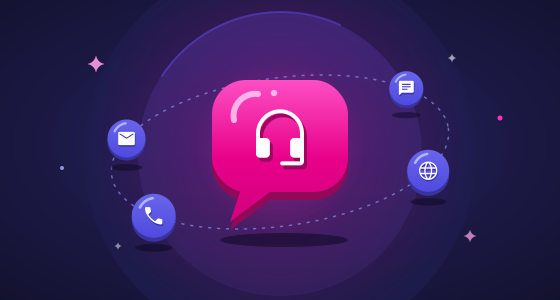
Many customer service organizations did not design their channel mix. They accumulated it. Email came first, then phone, then a chat widget on the website, then social media messages, and more recently WhatsApp. Each channel was added to answer a specific request, and very few were ever reviewed again. The result is a service operation that spreads the same team across five or six entry points, with uneven response times and a customer experience that depends on which channel the customer happened to choose.
The more useful question is not how many channels a company offers, but which channels serve which inquiries, at what cost, and for which customers. A clear criterion for that decision makes it possible to add channels with purpose and to close the ones that no longer justify their cost.
Channel decisions become difficult because each channel creates its own expectations, workflows, and internal owners. Once customers use a channel, closing it feels like a reduction in service, even when only a small share of contacts arrives there. Internal teams also become attached to the channels they manage, and the conversation shifts from customer needs to internal habits. Over the years, the organization keeps every channel open by default, and the cost of that decision remains invisible because it is distributed across several teams and budgets.
A second source of difficulty is the lack of comparable data. Phone metrics often live in a telephony system, email metrics in a help desk, and chat or WhatsApp metrics in a separate messaging tool. Without a single view, leaders cannot compare resolution time, satisfaction, or cost across channels on equal terms. Decisions are then based on anecdotes, such as a complaint that reached a senior executive, rather than on volume and outcome data. This is why the first step toward a rational channel mix is usually consolidation of reporting, before any channel is added or removed.
A practical way to decide the channel mix is to start from the inquiry, not from the channel. Four attributes describe most inquiries well: complexity, urgency, emotional weight, and the value of the customer relationship. Complexity measures how much information and how many steps the resolution requires. Urgency measures how quickly the customer needs an answer. Emotional weight reflects whether the customer is anxious, frustrated, or dealing with a sensitive matter. Customer value reflects the commercial importance of the account or segment.
When inquiries are classified with these four attributes, natural channel matches appear. Simple, low-urgency questions, such as order status or password resets, fit self-service and asynchronous messaging. Complex but not urgent cases, such as a billing dispute with attachments, fit email or a web form that captures structured data. Urgent and emotionally charged situations, such as a service outage or a fraud concern, require a synchronous channel with a person, usually phone or live chat. High-value customers may justify a dedicated contact or priority routing across every channel. This approach turns the channel mix into a consequence of the demand profile instead of a list of tools that the company happens to own.
Cost per contact is the metric most often used to compare channels, and it is useful, but it is incomplete. Phone contacts usually cost more than written contacts because an agent handles one conversation at a time. Chat and messaging allow agents to handle several conversations at the same time, and self-service resolves part of the demand without an agent. On paper, this suggests moving as much volume as possible toward the lower-cost channels, and many cost reduction plans follow that logic.
The limitation is that cost per contact does not measure whether the contact resolved the problem. A low-cost chat that ends without a resolution often generates a second contact by email and a third by phone. In that case, the real cost of the inquiry is the sum of all three contacts, plus the damage to customer satisfaction. A more accurate metric is cost per resolved inquiry, which combines cost per contact with first contact resolution and repeat contact rate. Analyses of customer service costs that use this metric frequently show that a channel with a higher cost per contact is the more economical option for complex inquiries, because it resolves them in a single interaction.
Customer preferences vary by country, by age group, and by type of customer, and a channel mix designed for one market rarely works unchanged in another. In much of Latin America, WhatsApp is the default communication tool for personal and commercial conversations. Customers expect to reach companies there in the same way they reach family members, and many perceive email as slow and formal. In other markets, email and phone remain the expected channels for formal matters, and messaging is used mainly for quick questions.
Segment differences are just as important as regional ones. Business customers often prefer email or a portal because they need a written record and must share the case with colleagues. Consumers often prefer messaging because it fits into their day without a scheduled call. Opening WhatsApp as a channel, however, is not the same as offering coordinated service through it. A WhatsApp Business API connection alone does not provide routing, service level tracking, or shared customer history, and without those elements the channel becomes another isolated inbox. The decision to prioritize a channel in a given market therefore needs to include the operational capacity to manage it well.
Limiting or retiring a channel makes sense when its volume is low, its resolution rate is weak, and the same inquiries can be served better elsewhere. Typical candidates are a social media channel that receives few service requests, a phone line that customers use mainly to ask for status updates, or a generic email address that duplicates a web form. The data needed for this decision includes volume trends, resolution rate, satisfaction scores, and the share of contacts that already arrive in other channels for the same customer.
How a channel is retired matters as much as the decision itself. Effective organizations rarely close a channel without warning. They first reduce its scope, for example by limiting phone service to urgent cases or specific hours, and they redirect customers with clear messages that explain where to go and why the alternative is faster. Automated replies, links to self-service, and transfer options to another channel help customers make the change without losing their case. Monitoring satisfaction and repeat contacts during the transition shows whether customers adopted the alternative or simply became frustrated. A gradual reduction with measurement protects the customer experience and still releases team capacity for the channels that matter most.
Once the channel mix is defined, the platform should support that decision, not dictate it. Freshdesk Omni brings email, phone, chat, WhatsApp, and social messaging into a single agent workspace, so every conversation becomes part of one customer history regardless of where it started. Agents can see previous interactions from all channels, which reduces repeated questions and makes channel transfers less disruptive for the customer. Routing rules and service level policies apply across channels, which allows the organization to treat an urgent inquiry with the same priority whether it arrives by chat or by email.
The platform also supports the measurement that keeps the channel mix current. Unified reports show volume, resolution time, and satisfaction by channel in a single place, which makes the comparisons described earlier possible without manual consolidation. Bots and self-service content can absorb simple, repetitive inquiries, and AI chatbot deflection can reduce the load on agents without removing the option to reach a person. When the organization decides to limit a channel, automations can send redirection messages and move open conversations to the preferred channel. In this way, the technology follows the criteria, and the channel mix can be reviewed periodically with real data.
GB Advisors helps organizations assess their current channel mix, classify inquiries by complexity, urgency, emotional weight, and customer value, and prioritize the channels that deliver the best balance between cost and resolution. Our experts can also support the configuration of Freshdesk Omni so that the chosen mix operates with consistent routing, service levels, and reporting.